What is inside the Munich Residenz: the rooms on the museum route
The question people mean by “what is the Residenz” is usually “what will I be walking through”, and the answer is a single long route through named rooms rather than a set of galleries you choose between. The palace administration’s own description of the Residence Museum is that from the 16th to the 19th century interiors of high artistic and material quality were created there in Renaissance, Baroque, Rococo, Neoclassicist and Historicist styles. Five styles, one walk, no way to skip the ones you are less interested in.
About 130 rooms, by the city’s count
The figure of about 130 rooms turns up everywhere: the city’s tourism portal, Rick Steves, the answer box at the top of a search. It is the city’s figure rather than the palace administration’s. What the palace administration publishes is a floor plan, and on that plan the rooms are numbered 1–93 on the ground floor and 13–127 upstairs, which is a different kind of statement and does not resolve into a single total.
In practice: it is more rooms than anyone walks attentively in one visit, which is what Brian meant on the private tour when he wrote “So many rooms - the tour could probably be longer.” (how long to allow).
The rooms worth knowing by name
The Antiquarium. The one people cross the city for, and the reason is measurable: 66 metres of barrel-vaulted hall, built for Duke Albrecht V between 1568 and 1571 to hold his collection of antique sculpture, and called by the operator the largest and most lavish Renaissance hall north of the Alps. Wilhelm V and Maximilian I turned it into a hall for festivities between 1581 and 1600. Look up for the 16 paintings from the workshop of Peter Candid in the crown of the vault, and look along the lunettes and window reveals for 102 views of towns, markets and palaces in what was then the Duchy of Bavaria (the Antiquarium, at length).
The Ancestral Gallery. The Ahnengalerie, and the name is the description: a gallery of ancestors, gilded from end to end. It is the room that makes the point of the whole building, because a dynasty hanging its own forebears down a corridor is a family making an argument about itself (who is on those walls).
The Ornate Rooms. The Reiche Zimmer, which the operator’s English pages call the Ornate Rooms.
The Nibelungen Halls, the Electoral Apartments, the Papal Rooms, the Stone Rooms and the Treves Rooms. Five more names off the operator’s own list of what the route contains. The route keeps changing subject, and it does not run out after the famous hall. This is also the stretch where the crowd thins, because most people are still recovering from the Antiquarium.
The city portal names four more parts of the building for visitors: the bronze halls, the Hercules Hall, the All Saints’ Court Church — which has its own entrance on the operator’s floor plan — and Ludwig I’s royal apartment.
What is at this address but not on the museum route
On the museum ticket
- The Antiquarium, and the Renaissance half of the building
- The Ancestral Gallery and the Ornate Rooms
- The Nibelungen Halls
- The Electoral Apartments, Papal Rooms, Stone Rooms and Treves Rooms
- Interiors in five named styles, 16th century to 19th
- The free audio guide, in nine languages
Not on it
- The Schatzkammer — its own ticket, ten rooms on the ground floor of the King’s Building
- The Cuvilliés Theatre — its own ticket, its own door and its own timetable
- Any audio commentary inside the theatre; the free handset stops at the Treasury
- The Hofgarten, which is free and on no ticket at all
- A guide. The City of Munich runs its own tours, and the platform sells more
- Anything you have to reserve; nothing here is booked in advance
That right-hand column is the whole confusion at this address in one list. Two of the three things people picture when they say “the Residenz” are not inside the museum ticket, and the third thing they picture — the garden — is not inside any ticket at all.
The order the route makes sense in
Take the museum first and give it the bulk of your time. Drop to the Treasury afterwards, because ten rooms of objects are easier to look at when you have stopped walking. Keep the theatre for last, both because it is short and because on most weekdays it will not let you in before two o’clock anyway (both timetablesThen go out into the Hofgarten, free to walk and the only part of the address with no closing time on itthe garden).
It runs in German, English, French, Italian, Spanish, Russian, Chinese, Japanese and Arabic, it is included with the ticket, and it is the difference between a walk past furniture and a walk through somebody’s argument about their own family — which is also what a guide does, out loud, in the room where the handset stops What else is waiting at the door.
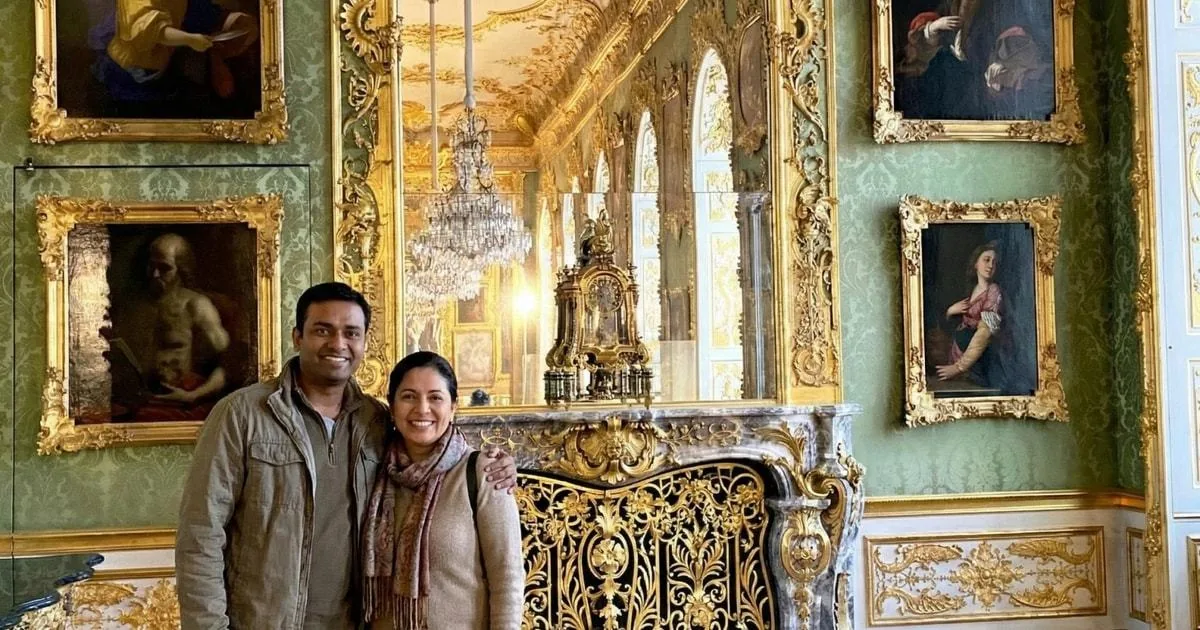 The guided one
Munich: Residenz Palace and Hofgarten Skip-the-Line Tour
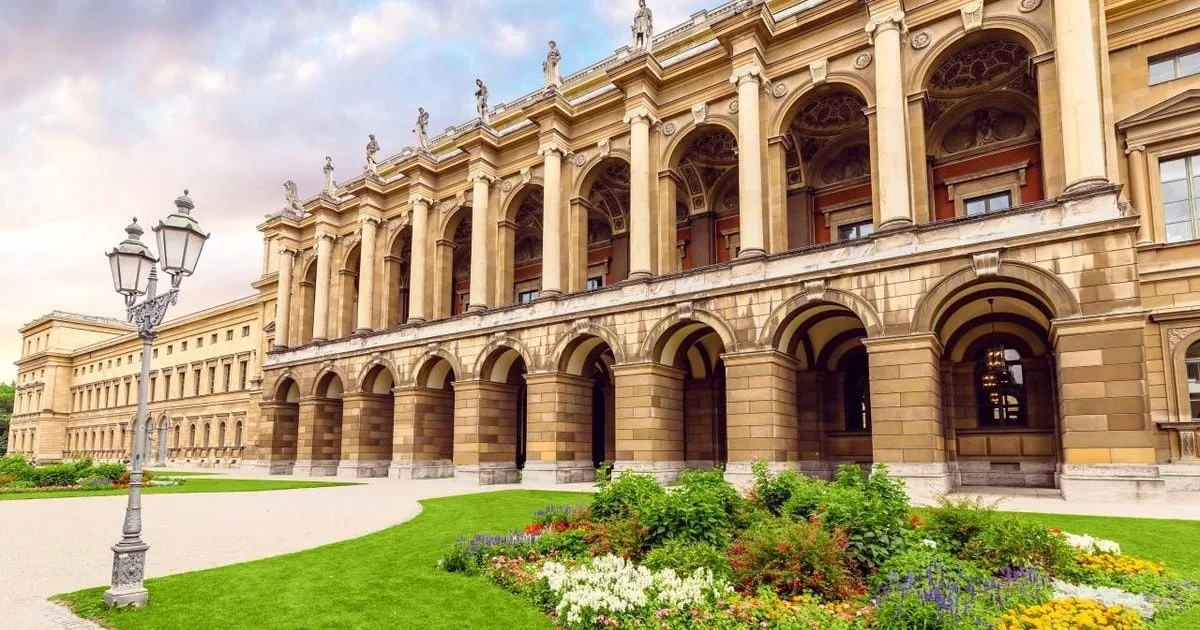 Private, all three parts
Munich: Residenz Palace, Museum and Treasury Private Tour
 First review in
Munich Residence Tour: Historical Highlights & Storytelling
Room by room from here: the Antiquarium, the Schatzkammer, the Cuvilliés Theatre, and the people whose rooms these were.
Frequently asked questions
What is inside the Munich Residenz?
The Residence Museum route runs through the Antiquarium, the Ancestral Gallery, the Ornate Rooms, the Nibelungen Halls, the Electoral Apartments, the Papal Rooms, the Stone Rooms and the Treves Rooms, with interiors made between the 16th and the 19th century in Renaissance, Baroque, Rococo, Neoclassicist and Historicist styles. The Treasury and the Cuvilliés Theatre are separate tickets at the same address.
How many rooms does the Munich Residenz have?
About 130 is the figure the city’s tourism portal and most guidebooks give; the palace administration publishes a floor plan instead: rooms numbered 1–93 on the ground floor and 13–127 upstairs. Either way it is more rooms than one visit walks attentively.
Is the Treasury included in the Munich Residenz museum ticket?
No. The Schatzkammer has its own ticket, and there is a pair ticket that covers it together with the museum, plus a single ticket covering all three parts. It occupies ten rooms on the ground floor of the King’s Building. The free audio guide does cover it. The tariff, with the arithmetic.
What is the most impressive room in the Munich Residenz?
By the operator’s own description, the Antiquarium: 66 metres long, built for Duke Albrecht V from 1568 to 1571 for his antique sculpture, and the largest and most lavish Renaissance hall north of the Alps. Its lunettes and window reveals carry 102 views of towns, markets and palaces in the old Duchy of Bavaria. The hall in full.
Is the Hofgarten part of the Munich Residenz museum?
No. The Court Garden is free, has no gate charge and is not inside any of the three admissions. It sits behind the palace and it is free to walk, at the end of the museum route or on the way in. The only timetable published for it is the fountain machinery, April to October, daily between 10 am and 2 pm. The garden.