Is the Munich Residenz worth it? Four versions of the question, answered separately
People type this four ways and mean four things by it. Is it worth seeing at all. Is it worth the money. What do the reviews actually say. And is it worth an afternoon when Munich is full of other afternoons. Those have different answers.
1. Is the Residenz in Munich worth seeing?
For most people, yes, and the case for it is specific rather than general. The Residence Museum has been open to the public since 1920 and the palace administration calls it one of the most important palace museums in Europe. What is behind that claim is range: interiors made between the 16th and the 19th century in Renaissance, Baroque, Rococo, Neoclassicist and Historicist styles, in one route, in one building. You can walk from a Renaissance sculpture hall into nineteenth-century royal apartments without going outside.
The single room that earns the visit on its own is the Antiquarium: 66 metres of barrel vault, built for Duke Albrecht V between 1568 and 1571 for his antique sculpture, and described by the operator as the largest and most lavish Renaissance hall north of the Alps. Its lunettes and window reveals carry 102 painted views of towns, markets and palaces in what was then the Duchy of Bavaria, which is a strange and very local thing to find over your head in a room of Roman busts (the hall in full).
The Treasury is a different pleasure and a separate ticket: ten rooms holding the crowns of the Kings and Queens of Bavaria, a statuette of St George, an altar ciborium and, in among them, a small gold crown described as the oldest surviving royal crown known to have been in England (what is in the ten rooms, and what that crown is not). And the Cuvilliés Theatre is one room of carved and gilded boxes that the operator calls a major work of Bavarian Rococo, and where Mozart’s Idomeneo was first performed in 1781 (what survived and what did not).
Munich’s own city portal calls this the largest inner-city palace in Germany and puts it at about 130 rooms. Both of those come from the city rather than the palace administration.
2. Is the Munich Residence worth it — for the money?
This is the easier half, because of what is included. The audio guide comes with the museum and Treasury ticket, in nine languages, so the ordinary visit here is a ticket with the narration already in it. Everyone under 18 is admitted free, as are students over 18 holding a valid card from a general or vocational school. The cloakroom is free and supervised. Photography for personal use is allowed. The Court Garden behind the palace has no ticket at all. Add that up and a family of two adults and three teenagers pays for two people and gets a narrated visit for all of them (the tariff, and who pays nothing).
Where the timing matters is the combination ticket against the theatre’s clock. All three parts on one ticket costs less than the three bought singly— and from Monday to Saturday for most of the year the theatre opens at 2 pm. A weekday morning visitor should buy the pair and add the theatre after two, or take the guided visit, which sequences all three.
The other place money goes is a guide, and it is worth being clear about what that buys. It is not narration — the handset supplies that. It is somebody to ask, the theatre explained, and the three doors handled in one sequence. Owen, on the historian-led private tour, made the case for it as well as anyone has: “With the size of the Residenz and it’s overall historical significance, one would be foolish to walk around it’s halls and antechambers without needed historical context.” Ten out of ten written reviews of the guided visit make the same case in their own words.
3. Residenz Munich reviews: what do people actually say?
First, what the numbers measure. The ratings here belong to the tours and concerts, not to the palace. A 4.8 is a verdict on a guide’s two and a half hours, a 4.6 on an evening of chamber music, so each rating sits on the card beside its listing.
With that said, the written reviews are useful, because the specific complaints repeat and the specific praise is about the building rather than the service. Maggie, on the guided visit: “The palace itself is incredible and a national treasure.” Phillip Keith, on the same listing: “Guide was extremely knowledgeable and explained things as we went through each room. Time for questions as we went along.”
And the complaints, which are the part worth planning around:
- The doors. Reviewers of all three evening halls describe walking the block before finding the way in, and one daytime reviewer wrote that “Residenzstrasse 1 isn’t enough for the size of the residence” (which door is which).
- The crowds at the front. Connor, on the storytelling tour, counted it as a plus that his guide “was able to help us navigate the masses at the front entrance”.
- The heat. Liam, on the guided visit, gave it five stars with a condition: “Although it was uncomfortably hot, the tour was worth it.” These are unventilated historic rooms in a summer city.
- The language. Alexander booked in English and found that the guide “briefly summarized a lot of important content for me again in German”. He still gave it five stars and said he would go again, but a mixed-language group is a real thing here.
- The length. Brian, after a private tour: “So many rooms - the tour could probably be longer.” The building outlasts most visits to it (how long to allow).
4. Is it worth an afternoon, with the rest of Munich competing for it?
Here is the comparison worth making before you plan. Of the sixteen listings in our catalogue, the biggest by a distance is the Alpine day trip: the Neuschwanstein and Linderhof full-day, with 16,428 written reviews. Divide that by the 908 written on all eleven Residenz listings put together and the answer is 18.1, so eighteen times over. The Third Reich and WWII walking tour has 7,257, which against the same 908 is eight times over, and it walks the streets outside this palace.
It is a fact about what people search for when they plan a trip to Bavaria, and it means the answer to “is it worth it” changes with what you had in mind. If you pictured turrets on a wooded hill, book that day — and give the Residenz the afternoon in the city that goes with it. If you want to know how the family who built these rooms actually lived in the middle of their own capital, this is that address (who lived here, by the rooms they left).
What works
- An operator that calls its own museum one of the most important palace museums in Europe, open since 1920, with five styles of interior on one route
- The Antiquarium: 66 metres, the largest and most lavish Renaissance hall north of the Alps by the operator’s own description
- A Treasury with the Bavarian crowns in it, on its own ticket, ten rooms deep
- A rococo court theatre where Idomeneo was first performed
- An audio guide in nine languages included, free entry under 18, a supervised cloakroom and an open garden
- In the middle of the city, open every day but five, no reservation needed
Worth knowing
- It is three tickets and more than one door — which is exactly what the guided visit sequences for you
- The Cuvilliés Theatre is shut until 2 pm from Monday to Saturday for most of the year
- It is a city palace, not a fairytale castle — that is the Alpine day trip, and the two pair well
- Rooms that are hot in summer and a front entrance that gets crowded
- The theatre you sit in is a reassembly: the building that housed it was destroyed on 18 March 1944
- Ratings here belong to the tours and concerts, so read each beside the listing that earned it
The war, and what it did to what you are looking at
The war is closer to this building than the state rooms let on. The Treasury reopened to the public on 21 June 1958 and the operator describes it as the first restored part of the museum after the war, which tells you plainly that there was a great deal to restore. The building that housed the Cuvilliés Theatre was destroyed on 18 March 1944; the painted wood carvings and other tier fittings had been taken to safety in 1943 and are all that survives of the original, and they were reassembled in a new building inside the complex from 1956. Johann Baptist Zimmermann’s ceiling painting did not come through.
Some visitors mind this and some find it the most interesting thing about the place. Owen’s guide brought photographs of the reconstruction, and he singled that out: the pictures “really add to the overall experience, especially with how the Residenz was reconstructed after WW2”. If that is the part that grips you, the Third Reich and WWII walk covers the same streets from the outside, and it is the one Munich-wide listing whose subject touches this one (what that walk is).
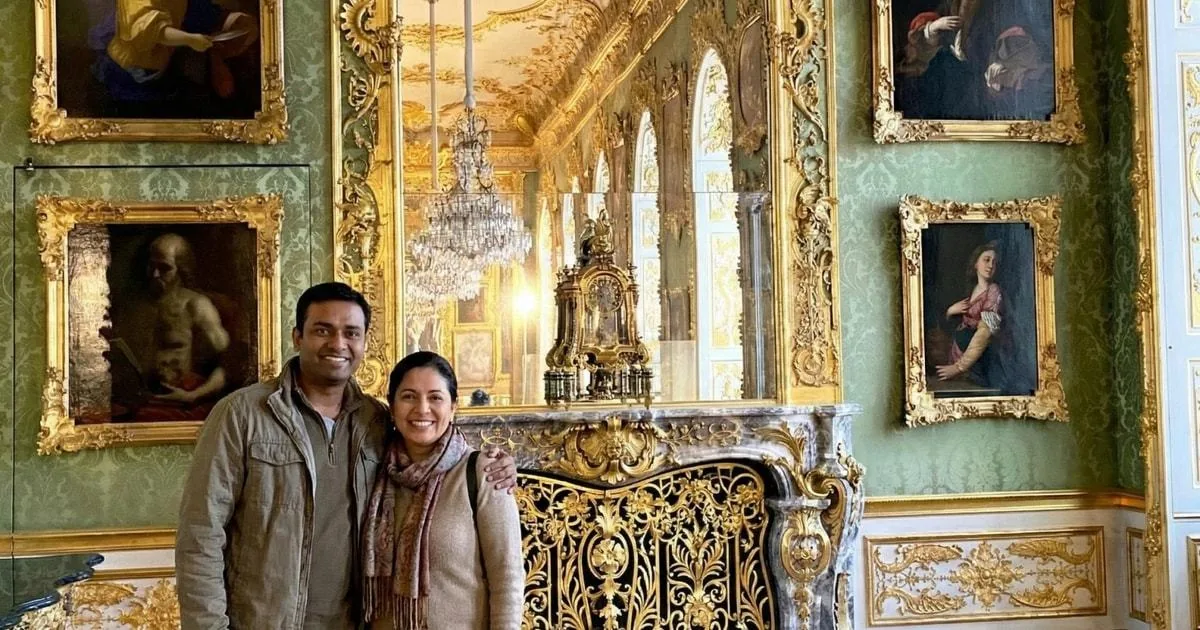 The guided one
Munich: Residenz Palace and Hofgarten Skip-the-Line Tour
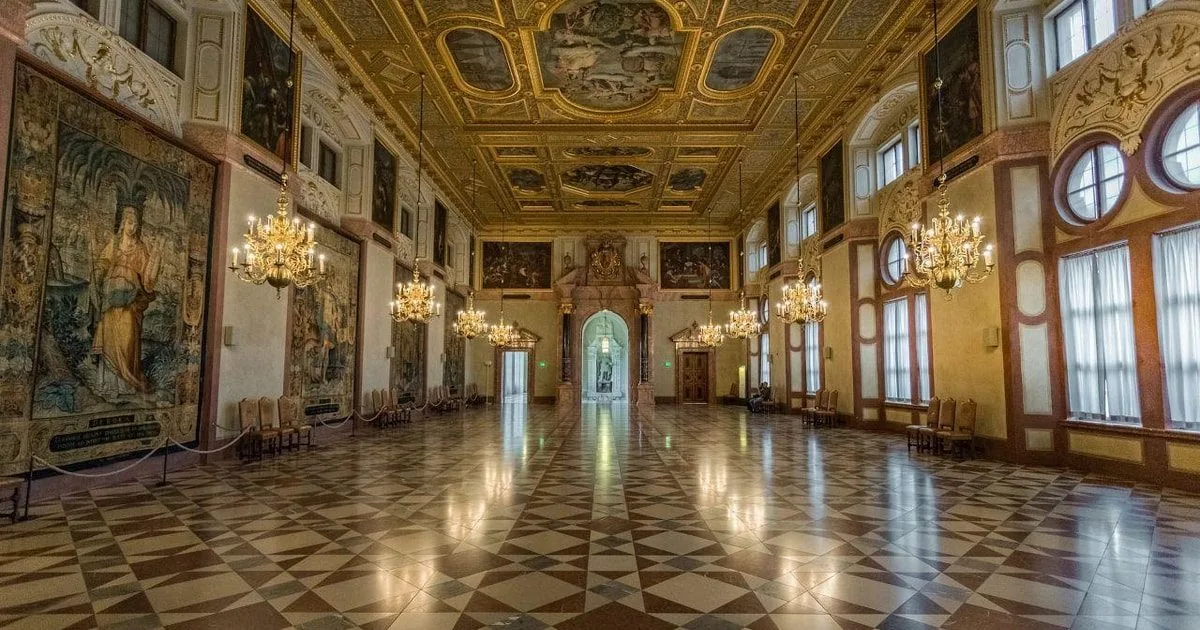 Historian-led
Private Historian-Led Munich Residenz & Treasury Tour
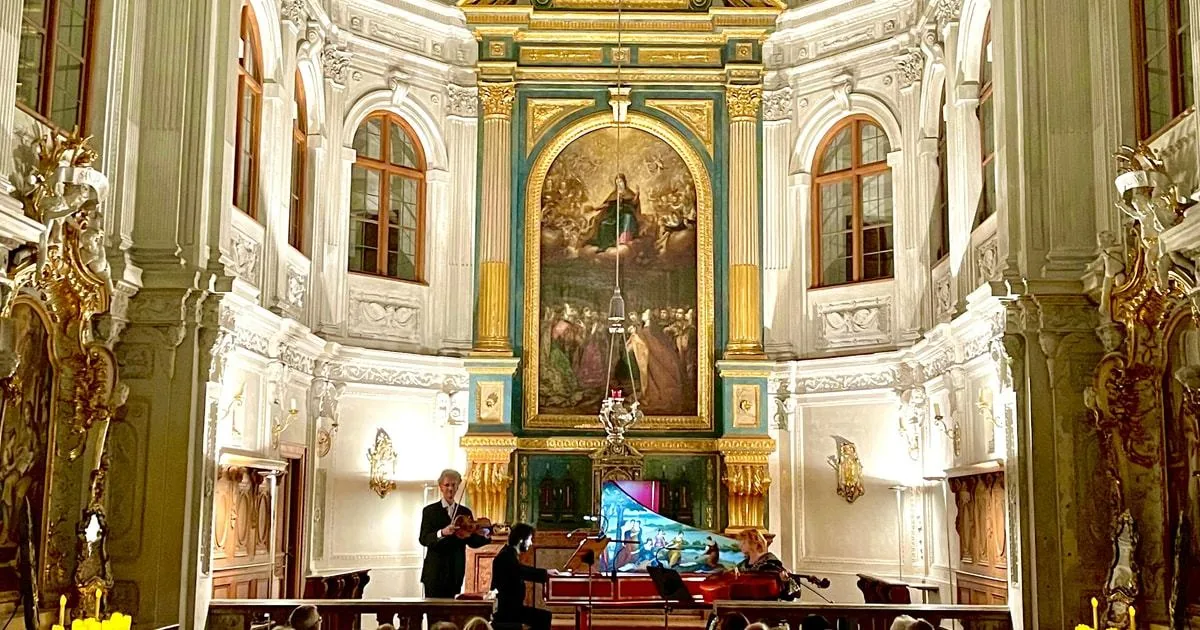 Most-reviewed thing here
Munich: Classical Concert at the Residenz Palace
Can’t make these dates?
Browse more available Munich Residenz tours and find one that fits your schedule — all with instant confirmation and free cancellation.
The rest of the decision: the whole address explained end to end, how long it takes, what is on the route, this palace or the other one, and every quote we use, with the listing it belongs to.
Frequently asked questions
Is the Residenz in Munich worth seeing?
For the interiors, yes. The palace administration calls the Residence Museum one of the most important palace museums in Europe and it has been open to the public since 1920, with rooms made between the 16th and the 19th century in five different styles. The Antiquarium alone is 66 metres of Renaissance vault. Visitors who came expecting a castle on a hill are describing a different building — the Alpine day trip — which pairs with this one rather than replacing it.
Is the Munich Residenz worth the money?
It is unusually good value once you count what is included: the audio guide in nine languages, free entry for everyone under 18, a free cloakroom and a Court Garden with no ticket at all. Time the all-three ticket for an afternoon on weekdays, when the Cuvilliés Theatre opens at 2 pm, or take the guided visit, which is timed around it. The tariff, and both savings.
What do reviews say about the Munich Residenz?
The praise is about the building — one reviewer called the palace itself “incredible and a national treasure” — and the complaints repeat: finding the right door, crowds at the front entrance, heat in summer, and visits that end before the rooms do. The ratings belong to individual tours and concerts, and the guided visit’s ten written reviews are all five stars. The quotes in full.
Is the Munich Residenz better than Neuschwanstein?
They are not the same kind of day, and most visitors do both. Divide the Neuschwanstein and Linderhof day trip’s 16,428 written reviews by the 908 left on all eleven Residenz listings together and the answer is 18.1, so eighteen times over. It is ten to ten and a half hours on a coach into the Alps; the Residenz is a city-centre palace museum you can walk to, and the two fit into the same stay. Both, compared.
Who does the Munich Residenz suit best?
Anyone who wants interiors in the city centre, on foot, on any day of the year but five. Three plans go wrong reliably — expecting one ticket when it is three ticketed parts, buying a combination ticket for a weekday morning when the theatre opens at 2 pm, and expecting a fairytale castle — and the guided visit, which sequences all three parts, removes the first two. Everyone else tends to run out of time rather than interest. How the day actually starts.
Do you need a guide at the Munich Residenz?
Not for narration — the audio guide is included with the museum and Treasury ticket, in nine languages. What a guide adds is somebody to ask, the theatre explained, and the three doors sequenced — which every written review of the guided visit here praises, and which one reviewer of the historian-led tour argued is essential given the size of the place. The City of Munich also runs its own regular tours in English and German. What each listing adds.